Shutterbugs, Rejoice: Surabaya’s Skyline Secrets Unfold Through the Lens
From the first golden rays of dawn kissing the domes of colonial-era masterpieces to the neon glow dancing off modern steel giants, Surabaya isn’t just Indonesia’s second city—it’s a living canvas for photographers chasing iconic architecture. I never expected this industrial powerhouse to bloom with such visual poetry. Capturing its landmark structures feels like flipping through layers of history, resilience, and bold reinvention—all in a single frame. More than a commercial hub, Surabaya reveals itself through its built environment: a blend of Dutch colonial grace, Islamic serenity, Chinese heritage, and contemporary Indonesian ambition. For the thoughtful lens, this city offers not just scenes, but stories waiting to be composed, framed, and preserved.
The Architectural Pulse of Surabaya
Often overshadowed by Jakarta’s metropolitan sprawl or Bali’s tropical allure, Surabaya quietly asserts its identity through its skyline. As East Java’s capital and Indonesia’s second-largest city, it pulses with an energy that is both industrious and culturally rich. Its streets tell tales of trade, resistance, and reinvention—each era etching its mark into brick, stone, and steel. Unlike cities built for tourism, Surabaya’s architectural charm is authentic, unpolished in places, yet deeply expressive. For photographers, this authenticity is a gift. The city doesn’t perform for the camera; it simply exists, allowing those with patience and perspective to capture its soul.
What makes Surabaya particularly compelling is its architectural diversity. Walking through its center feels like traversing centuries in a single afternoon. One moment, you’re beneath the shadow of a 19th-century Dutch administrative building; the next, you’re dwarfed by the glass façade of a modern shopping complex. This coexistence isn’t accidental—it reflects Indonesia’s journey from colony to sovereign nation, from traditional society to urban modernity. For the photographer, this layered history offers endless compositional possibilities: contrast, symmetry, texture, and light all come into play.
Moreover, Surabaya’s urban planning has preserved many of its historic structures while accommodating growth. Heritage buildings stand shoulder to shoulder with new developments, creating visual dialogues between old and new. This dynamic tension is not only aesthetically striking but also narratively rich. Photographers who understand this context can go beyond surface-level snapshots to create images that speak of continuity, adaptation, and cultural pride. The city rewards those who look closely, wait for the right light, and respect the spaces they capture.
Subana Building: Where Colonial Grandeur Meets Urban Grit
Rising like a sentinel from Surabaya’s historic core, the Subana Building is one of the city’s most enduring symbols of Dutch colonial architecture. Constructed during the early 20th century, it once housed key administrative offices and commercial enterprises under colonial rule. Today, its weathered façade—adorned with intricate stonework, arched windows, and a symmetrical layout—stands as a testament to a bygone era. The building’s grandeur is undeniable, yet it is softened by time and tropical humidity, lending it a patina that photographers find irresistible.
For visual storytellers, the Subana Building offers a masterclass in texture and light. The interplay of shadow and sunlight across its carved surfaces creates depth and dimension, especially during golden hour. Shooting from a low angle enhances the building’s imposing presence, while a wide aperture can isolate details like weathered cornices or iron grilles. Because the surrounding streets are often bustling, early morning visits—around 6:30 to 7:30 AM—offer the best conditions for unobstructed shots. At this hour, soft, diffused light bathes the façade, and foot traffic is minimal, allowing for cleaner compositions.
One of the most compelling aspects of photographing the Subana Building is its juxtaposition with the modern city. Framing it against a backdrop of passing motorbikes, street vendors, or high-rise towers creates a powerful narrative of continuity. It’s not just a relic; it’s a living part of the urban fabric. For photographers, this contrast invites creative framing—using reflections in puddles, shooting through foreground elements, or capturing long exposures of moving traffic to emphasize stillness. The key is to approach the site with intention, respecting both its historical weight and its current role in daily life.
Tunjungan Plaza: Modernity in Motion
If the Subana Building represents Surabaya’s past, Tunjungan Plaza embodies its present—and future. Spanning over half a million square meters, this sprawling shopping complex is one of the largest in Southeast Asia. But beyond its retail function, Tunjungan Plaza is an architectural statement: a multi-phase development that blends sleek glass towers, open-air walkways, and illuminated facades into a dynamic urban landscape. For photographers, it offers a playground of reflections, geometric patterns, and kinetic energy.
Nighttime transforms Tunjungan Plaza into a spectacle of light and movement. The illuminated signs, animated displays, and flowing crowds create a vibrant atmosphere perfect for long-exposure photography. Capturing light trails from passing vehicles or the blur of pedestrians against sharp architectural lines can produce striking urban compositions. Elevated pedestrian bridges along Jalan Tunjungan provide ideal vantage points, offering unobstructed views of the complex without obstructing public pathways. These overpasses also allow for layered shots—foreground lights, mid-level structures, and distant skylines—all within a single frame.
While drones offer tempting aerial perspectives, it’s important to note that drone use in central Surabaya is restricted, especially near commercial and government zones. Instead, photographers can rely on ground-level creativity. Reflections in glass façades, for instance, can double the visual impact—capturing both the building and its mirrored surroundings. Shooting during late afternoon, when the sun casts warm sidelight on the towers, enhances texture and dimension. Additionally, framing the complex with traditional street vendors or local families enjoying the open plazas adds human scale and cultural context, elevating the image from mere documentation to storytelling.
Surabaya City Hall: Power, Symmetry, and Civic Pride
At the heart of Surabaya’s civic life stands Balai Kota, the city hall—a neoclassical masterpiece that radiates authority and elegance. Completed in the 1920s, the building was designed to convey stability and order, with its grand staircase, symmetrical wings, and imposing colonnades. Today, it remains a functioning government center, but its architectural significance makes it a magnet for photographers seeking formal composition and historical resonance.
The strength of Balai Kota lies in its geometry. Its long central axis, flanked by rows of columns and capped by a central dome, creates natural leading lines that draw the eye toward the building’s core. Using a wide-angle lens from the front plaza emphasizes this symmetry, while a slightly elevated position—such as the steps of a nearby structure—can help eliminate distracting foreground elements. Early morning is again the optimal time to shoot, as the building is less crowded and the soft light enhances its pale façade without harsh contrasts.
Photographing government buildings requires sensitivity. While exterior shots are generally permitted, close-ups of security personnel or restricted entrances should be avoided out of respect for privacy and regulations. Instead, focus on architectural details: the texture of stone columns, the play of light through archways, or the reflection of the dome in rain-soaked pavement. These elements convey the building’s presence without overstepping boundaries. For a more intimate perspective, consider visiting during civic events or public holidays, when the plaza is open to visitors and the atmosphere is celebratory—offering opportunities to capture both the structure and the community it serves.
The Cakalang Bridge: Engineering as Art
Spanning the Kalimas River with graceful cable-stays and a streamlined deck, the Cakalang Bridge is more than a transportation link—it’s a sculpture in motion. Completed in the 2010s, this modern infrastructure project was designed to ease congestion while enhancing the city’s connectivity. Yet, from a photographic standpoint, its value goes beyond utility. The bridge’s sleek lines, rhythmic cables, and reflective surfaces make it a compelling subject, especially when framed against the river’s flow and the surrounding urban backdrop.
One of the most effective ways to photograph the Cakalang Bridge is from the riverbanks. Low-angle shots emphasize the height of the towers and the tension of the cables, creating dramatic silhouettes at sunrise or sunset. Using a polarizing filter can reduce glare on the water, enhancing reflections and adding depth to the composition. Long exposures—between 10 to 30 seconds—can transform moving traffic into smooth streaks of light, contrasting with the bridge’s static form. This technique works particularly well at dusk, when the bridge’s own lighting begins to glow against a fading sky.
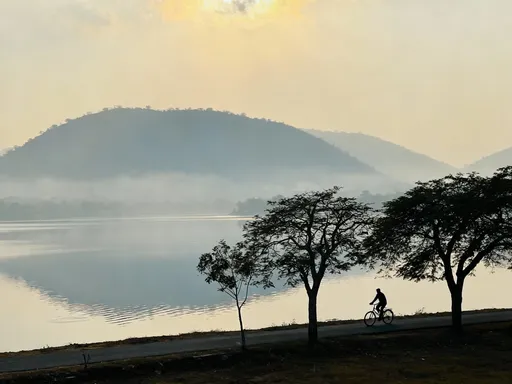
Foggy mornings, though rare, offer a magical opportunity. When mist rises from the river, it softens edges and creates layers of atmosphere, turning the bridge into a ghostly silhouette. These conditions demand patience and timing, but the results are ethereal—images that feel both modern and timeless. For those interested in human elements, capturing commuters on foot or cyclists crossing the bridge adds scale and narrative. The Cakalang Bridge is not just steel and concrete; it’s a conduit of daily life, and photography that acknowledges this duality resonates more deeply.
Cheng Hoo Mosque: Harmony in Design and Faith
Among Surabaya’s many places of worship, the Cheng Hoo Mosque stands out for its unique architectural synthesis. Named after the legendary Chinese Muslim admiral Zheng He, the mosque blends Chinese, Arabic, and Javanese design elements into a harmonious whole. Its upturned eaves, red pillars, and dragon motifs contrast with traditional domes and minarets, creating a visual language that speaks of cultural integration and spiritual inclusivity. For photographers, it’s a rare opportunity to capture a building that transcends singular traditions.
Respectful photography is essential when visiting religious sites. Visitors are expected to dress modestly, remove shoes before entering prayer halls, and avoid photographing worshippers during prayer times. However, the exterior and courtyard areas offer abundant opportunities for compelling images. Late afternoon light—between 4:00 and 5:30 PM—is ideal, as it casts warm tones on the red and gold façade while minimizing harsh shadows. Shooting from the courtyard allows for full-frontal views that include the symmetrical layout, ornate rooflines, and surrounding greenery.
One powerful technique is to capture the mosque’s reflection in nearby water features or wet pavement after rain. This doubles the visual impact and enhances the sense of balance and harmony. Close-up shots of decorative details—such as carved dragons, calligraphy panels, or lotus-shaped finials—add depth to a photographic series. The Cheng Hoo Mosque is not just a place of worship; it’s a statement of unity, and photographs that emphasize its inclusive design contribute to a broader narrative of peaceful coexistence. For the thoughtful photographer, it’s a reminder that architecture can be both beautiful and meaningful.
Hidden Gems: Offbeat Structures Beyond the Center
While Surabaya’s landmarks draw well-deserved attention, some of its most rewarding photographic moments lie off the beaten path. In the port district of Tanjung Perak, repurposed warehouses with rusted metal roofs and faded signage offer a gritty, industrial aesthetic. These structures, once vital to the city’s trade economy, now stand as quiet monuments to Surabaya’s maritime history. Their weathered surfaces, broken windows, and peeling paint create rich textures perfect for black-and-white photography or dramatic chiaroscuro lighting.
Further afield, tucked into quiet backstreets of older neighborhoods, Art Deco remnants from the 1930s can still be found. These buildings—often converted into shops or residences—feature geometric motifs, stepped facades, and decorative stucco work. They are easily overlooked, but for the observant photographer, they offer a glimpse into a less-documented era of urban design. Timing is crucial: midday sun can wash out details, so late afternoon or overcast days provide more forgiving light. Using a standard or telephoto lens to isolate façades from modern clutter helps preserve their original character.
Exploring these hidden sites often requires local transportation. Surabaya’s city buses and angkot (minivans) provide affordable and authentic access to lesser-known areas. Engaging with residents—politely, with a smile—can lead to unexpected discoveries: a hidden courtyard, a preserved colonial doorway, or a rooftop with an unobstructed view. These moments of serendipity are what make urban photography so rewarding. They remind us that cities are not just collections of buildings, but living, evolving stories waiting to be seen.
Framing Surabaya’s Soul
Surabaya is not a city of postcard perfection. It is loud, layered, and unapologetically real. Yet, it is precisely this authenticity that makes it a treasure for photographers. Its skyline tells a multifaceted story—one of colonial ambition, spiritual diversity, economic resilience, and cultural synthesis. From the stately Subana Building to the soaring Cakalang Bridge, from the serene Cheng Hoo Mosque to the bustling Tunjungan Plaza, each structure contributes to a narrative that is both Indonesian and universal.
To photograph Surabaya is not just to document buildings, but to engage with history, community, and identity. It requires more than technical skill; it demands patience, respect, and curiosity. The best images emerge not from rushing from landmark to landmark, but from lingering, observing, and allowing the city to reveal itself in quiet moments—the way light falls on a weathered wall, how children play beneath a bridge, or how a centuries-old mosque welcomes the modern world with open design.
As cameras become more accessible and travel more common, the role of the photographer grows more important. We are not just recorders, but interpreters. In Surabaya, where every brick seems to whisper a story, the lens becomes a bridge between past and present, between observer and observed. So take your time. Respect the spaces you enter. Seek not just the iconic, but the intimate. And in doing so, you won’t just capture Surabaya’s skyline—you’ll frame its soul.