This Is Why Suwon’s Cultural Vibes Are Pure Magic for Your Camera
You know that feeling when a place just clicks—not just in your heart, but through your lens? Suwon, South Korea, gave me exactly that. Far from the neon rush of Seoul, this city blends ancient palaces, living traditions, and street-energy culture in ways that beg to be photographed. I didn’t expect to find such rich cultural moments around every corner—each one more share-worthy than the last. If you're chasing authenticity with serious outfit-check backdrops, Suwon needs to be next on your list. What makes this city so uniquely photogenic isn’t just its well-preserved history, but how seamlessly it invites you in. From the echoes of drumbeats along fortress walls to the rustle of hanbok fabric in the breeze, Suwon offers layered, emotionally resonant scenes that feel both timeless and immediate. This is a destination where culture isn’t staged behind glass—it’s lived, worn, and celebrated daily, making it a quiet powerhouse for travelers who value depth, dignity, and beauty in their journeys.
Why Suwon? Beyond Seoul’s Shadow
Suwon often plays the quiet sibling to Seoul’s global fame, yet it holds a cultural richness that rivals—and in many ways surpasses—its louder neighbor. Located just 30 kilometers south of the capital, Suwon is easily accessible by subway or car, making it an ideal day trip or weekend escape for those looking to step beyond the tourist mainstream. What sets Suwon apart is its ability to balance historical gravitas with vibrant contemporary life. At its core lies the Hwaseong Fortress, a UNESCO World Heritage site built in the late 18th century under King Jeongjo to honor his father and showcase innovative military architecture of the Joseon Dynasty. This fortress isn’t a relic frozen in time; it’s a living, breathing part of the city’s identity, woven into daily routines and seasonal celebrations.
For photographers, this means access to authentic moments without the intrusion of mass tourism. While Gyeongbokgung Palace in Seoul draws thousands daily, Suwon offers similar grandeur with far fewer crowds, allowing for more intimate, unobstructed compositions. The city’s layout encourages exploration on foot, with winding alleys, traditional tea houses, and neighborhood markets nestled within walking distance of major landmarks. Unlike many heritage destinations that feel curated for visitors, Suwon maintains a grounded, lived-in quality. Children fly kites near ancient gates, families picnic on fortress walls, and local artisans demonstrate crafts just as their ancestors did. These everyday interactions are the raw material of meaningful photography—scenes that capture not just beauty, but belonging.
Moreover, Suwon’s deliberate preservation efforts have created a harmonious blend of old and new. Modern cafes sit beside centuries-old pavilions, and street art complements stone fortifications without clashing. This balance makes the city visually compelling across genres—whether you're drawn to architectural symmetry, candid human moments, or the play of light on weathered stone. For women aged 30 to 55, many of whom travel with family or seek enriching solo experiences, Suwon offers a sense of safety, accessibility, and cultural depth that resonates on a personal level. It’s a place where you can slow down, observe, and truly see—not just snap a photo, but feel the weight and warmth of history in every frame.
Hwaseong Fortress: Where History Comes Alive
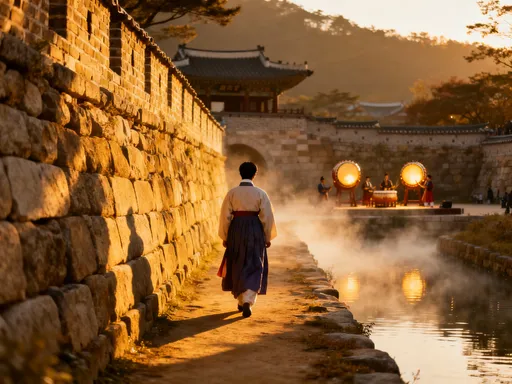
The Hwaseong Fortress is the soul of Suwon, a 5.7-kilometer defensive structure that encircles the city’s historic center. Completed in 1796, it was designed using cutting-edge engineering principles of its time, blending Korean, Chinese, and European influences. Its massive stone walls, soaring gates, and strategically placed watchtowers were not only functional but symbolic—representing stability, protection, and royal authority. Today, walking along the fortress walls offers one of the most immersive photographic experiences in South Korea. The elevated pathways provide panoramic views of red-tiled rooftops, tree-lined streets, and distant mountain ridges, creating layered compositions that shift with every turn.
One of the most dynamic aspects of photographing Hwaseong is the presence of reenactments. At designated times, costumed performers portray Joseon-era soldiers, complete with traditional weapons and ceremonial movements. The changing of the guard at Janganmun Gate, the northern entrance, is a popular event that draws small crowds but never feels overcrowded. These performances offer a rare opportunity to capture motion and narrative—drummers marching in formation, archers demonstrating period techniques, and flag bearers unfurling royal banners against the backdrop of stone battlements. The contrast between still architecture and moving figures creates visual tension that elevates any image from snapshot to storytelling.
For optimal photography, timing is essential. Early morning light, especially during spring and autumn, casts a soft golden glow across the fortress walls, highlighting textures and minimizing harsh shadows. Sunrise visits also ensure fewer tourists, allowing for clean, uncluttered shots of gates and pavilions. Late afternoon offers the warm hues of golden hour, ideal for silhouette work or portraits with the fortress as a dramatic backdrop. In winter, light snow dusting the stone pathways can create ethereal scenes, while summer evenings bring the gentle fade of twilight, perfect for long-exposure shots of lantern-lit walkways.
Seasonal festivals further animate the fortress grounds. The annual Suwon Hwaseong Cultural Festival, held each October, transforms the site into a living museum. Parades in full historical regalia, traditional music concerts, and craft demonstrations unfold along the walls and within the palace complex. For photographers, this is a treasure trove of color, movement, and cultural expression. Even outside festival periods, the fortress remains a hub of activity—locals practice tai chi at dawn, students gather for group photos, and couples stroll hand-in-hand along the ramparts. These organic moments, when captured with sensitivity, convey the enduring relevance of heritage in modern life.
Traditional Performances That Stop You in Your Tracks
Within the walls of Hwaseong Fortress, traditional Korean performances are not occasional attractions—they are regular, deeply rooted expressions of cultural continuity. These events, often free and open to the public, offer some of the most visually arresting opportunities for photography in Suwon. The most iconic are the samulnori drumming ensembles, whose synchronized rhythms and dynamic movements create a natural cadence for visual storytelling. Dressed in vibrant hanbok, the performers strike large barrel drums, gongs, and cymbals with precise, powerful gestures. The energy is palpable—the flash of drumsticks in midair, the intensity in their expressions, the ripple of fabric with each movement—all of which translate into compelling still images.
Royal processions are another highlight, reenacting the ceremonial journeys of King Jeongjo along the fortress roads. Participants wear elaborate court attire, including wide-brimmed hats, embroidered robes, and ornate headdresses. The procession moves slowly, allowing photographers to position themselves at key vantage points such as gateways or stone bridges. Capturing the long line of figures against the backdrop of arched gates creates a sense of depth and historical continuity. The use of color in these costumes—deep blues, rich reds, and gold embroidery—adds visual drama, especially when contrasted with the neutral tones of stone and wood architecture.
Folk dances, such as the salpuri or ganggangsullae, offer another layer of emotional resonance. These dances often carry spiritual or communal meanings, from healing rituals to harvest celebrations. The fluid hand movements, rhythmic footwork, and coordinated group formations translate beautifully into photographs, particularly when shot in sequence to suggest motion. The dancers’ expressions—serene, focused, joyful—add humanity to the images, connecting viewers across time and culture. For women who appreciate the grace and strength of female performers, these moments are especially moving.
To photograph these performances effectively, it’s important to be respectful and unobtrusive. Many events have designated viewing areas, and flash photography is often discouraged. Using a zoom lens allows for close-up details without disrupting the performance. Capturing not just the performers but the audience—children watching in awe, elders nodding to the rhythm—adds context and warmth. These images become more than records of an event; they document a shared cultural experience, a moment of collective memory preserved through the lens.
Paldalmun Gate & the Pulse of Local Life
Of the four main gates of Hwaseong Fortress, Paldalmun—the South Gate—stands as a vibrant crossroads where history meets daily life. Unlike more formal entrances, Paldalmun buzzes with organic activity, making it one of the most rewarding spots for candid photography in Suwon. The surrounding plaza is a gathering place for locals of all ages: elderly men hunched over janggi (Korean chess) boards, vendors selling tteokbokki and roasted sweet potatoes, and families pausing for photos before entering the fortress. The gate itself, with its two-tiered wooden pavilion and sweeping tiled roof, rises majestically above the scene, anchoring every composition with architectural grandeur.
What makes Paldalmun particularly special is the interplay between tradition and modernity. A woman in a modern coat might adjust the hanbok of her young daughter beneath the shadow of the gate, while a delivery rider zips past on an electric scooter. These juxtapositions create rich, layered images that speak to the continuity of culture in contemporary society. The gate is not a museum piece; it is a threshold that people pass through every day, carrying their routines and rituals with them. For photographers, this means endless opportunities for authentic, unposed moments—laughter shared between friends, the concentration of a street artist at work, the quiet dignity of an elder feeding pigeons.
Early evenings are especially photogenic, as lanterns strung above the plaza begin to glow, casting a warm, inviting light. The scent of street food fills the air, and the hum of conversation blends with distant music from a busker’s guitar. This is the heartbeat of Suwon—neither touristy nor isolated, but genuinely lived. Capturing these scenes requires patience and presence. Rather than rushing from shot to shot, slowing down allows you to notice subtle details: the way light catches a steaming bowl of mandu, the reflection of lanterns in a rain puddle, the smile exchanged between strangers. These small moments, when framed with care, become powerful testaments to the beauty of ordinary life.
For women who value connection and authenticity in their travels, Paldalmun offers a space to observe and participate. Sitting on a bench with a cup of hot barley tea, watching the world go by, can be as enriching as any guided tour. And when you raise your camera, it’s not to extract an image, but to honor what you see—a city that honors its past while embracing the present.
Hanbok Experiences: Dress the Part, Live the Culture
One of the most transformative ways to engage with Suwon’s culture is by wearing hanbok, the traditional Korean attire. Once reserved for special occasions, hanbok rentals have become increasingly popular among locals and visitors alike, particularly around historical sites like Hwaseong Fortress. Dozens of rental shops line the streets near Paldalmun and Hwahongmun Gate, offering a wide range of styles, colors, and sizes. From elegant silk dresses in soft pastels to bold, high-contrast designs for children and men, there is something for every taste and occasion. Many shops provide full styling services, including hair arrangement and accessories, ensuring a polished, authentic look.
Wearing hanbok does more than create beautiful photos—it fosters a deeper connection to the culture. The act of dressing in these garments, with their flowing lines and symbolic details, shifts your perspective. You move differently, more deliberately, becoming aware of your posture and presence. As you walk through the fortress grounds in hanbok, you’re not just observing history—you’re participating in it. Other visitors often smile, children wave, and elders nod in approval, creating a sense of inclusion and mutual respect. These interactions, when captured naturally, result in some of the most heartfelt images of your trip.
For photography, the visual impact of hanbok is undeniable. The vibrant colors and intricate patterns stand out beautifully against the muted tones of stone walls and wooden pavilions. Long skirts and wide sleeves add movement to portraits, especially when caught in a breeze. To make the most of your shoot, consider timing your rental for weekday mornings, when crowds are thinner and lighting is optimal. Many rental shops offer guided photo sessions with professional photographers, but even a self-guided walk can yield stunning results if you explore lesser-known paths along the fortress walls or quiet garden courtyards.
For mothers traveling with children, matching hanbok sets are a cherished experience. Seeing your daughter twirl in a miniature version of your dress, or your son stand tall in a traditional jacket, creates memories that extend far beyond the camera roll. These moments—genuine, joyful, and culturally immersive—are what make Suwon so special. And when you return home, your photos aren’t just souvenirs; they’re visual stories of connection, identity, and beauty.
Seasonal Events That Elevate Your Shots
Suwon’s cultural calendar is rich with seasonal events that transform the city into a living canvas for photography. Each time of year brings distinct moods, colors, and traditions, offering fresh inspiration no matter how many times you visit. Spring arrives with the Suwon Lantern Festival, when thousands of handcrafted paper lanterns illuminate the fortress walls and surrounding parks. Shaped like animals, flowers, and historical figures, these lanterns cast a warm, magical glow, perfect for long-exposure night photography. Families walk together under the light, children clutching glowing balloons, creating scenes of quiet wonder.
Summer introduces the Suwon Night Market, held regularly near the fortress moat. Stalls overflow with local delicacies—grilled skewers, bingsu (shaved ice), and fresh fruit juices—while live music fills the air. The market’s vibrant energy is ideal for street photography, capturing the interplay of neon signs, sizzling food, and animated faces. Evening temperatures are mild, and the fortress lights reflect softly on the water, adding depth to your compositions. For those who enjoy photographing food and human connection, this is a seasonal highlight.
Autumn is arguably the most photogenic season, as golden ginkgo trees and crimson maple leaves frame the fortress in rich, warm hues. The contrast between fiery foliage and gray stone walls creates dramatic, high-impact images. Morning fog often lingers in the valleys, adding a mystical quality to wide-angle shots. This is also the season of harvest festivals, where traditional games, rice-cake making, and folk music celebrate the bounty of the land. The colors, textures, and rituals of autumn offer endless creative possibilities.
Winter brings its own quiet beauty. While colder, the season offers clear skies and soft, diffused light—ideal for crisp architectural shots. The annual winter illuminations bathe the fortress in shimmering lights, turning the walls into a glowing ribbon through the city. Snowfall, though infrequent, can transform the landscape into a monochrome dream, where footprints in fresh powder lead toward ancient gates. Each season, in its own way, invites you to see Suwon anew—not as a static destination, but as a place alive with rhythm and change.
From Lens to Legacy: Why These Moments Matter
Photographing Suwon is about more than capturing beautiful images—it’s about preserving meaning. Every frame holds a story: of resilience, of continuity, of quiet pride in cultural identity. When you photograph a grandmother teaching her granddaughter a folk song, or a craftsman carving wood by hand, you’re not just documenting a moment—you’re honoring a legacy. These images become bridges between generations, between cultures, between the past and the present. For women who value connection, memory, and intentionality, photography in Suwon becomes an act of reverence.
But with this privilege comes responsibility. Mindful photography means asking permission when appropriate, avoiding disruptive behavior, and respecting sacred or private moments. It means focusing not just on aesthetics, but on authenticity—seeking truth over perfection. A slightly blurred shot of a laughing child in hanbok may carry more emotional weight than a technically flawless but soulless composition. True beauty lies in sincerity, in the unguarded glance, the shared smile, the quiet dignity of everyday life.
Ultimately, Suwon invites us to be storytellers. Not as outsiders looking in, but as participants, witnesses, and keepers of memory. Your camera is not just a tool—it’s a voice. And through it, you can share a vision of culture that is vibrant, enduring, and deeply human. So pack your lens, wear your curiosity like a well-fitted hanbok, and step into the heart of Suwon. Let the fortress walls guide you, let the drumbeats move you, and let your photos reflect not just what you saw, but what you felt. Because in a world that often feels fleeting, these images become anchors—reminders of beauty, connection, and the quiet magic of a place that truly clicks.